 Arashiyama Bamboo Forest
Arashiyama Bamboo Forest at Night: What You Actually Get
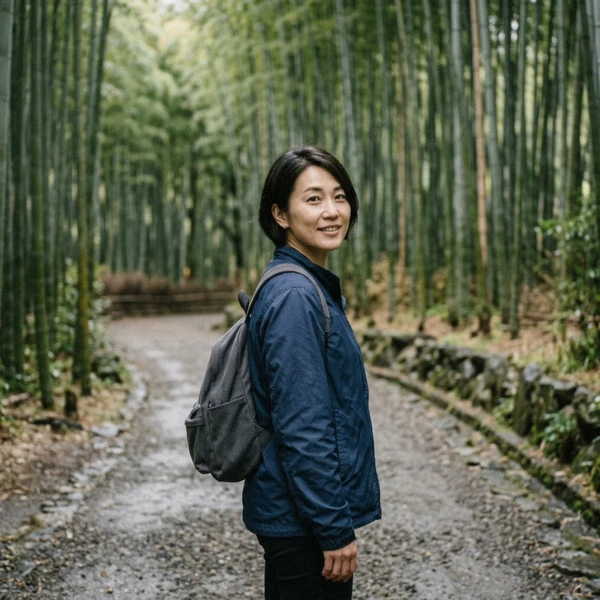
You can walk the Arashiyama bamboo forest at night. The path has no gate and no closing time, nobody checks it after dark, and it costs nothing at midnight exactly as it costs nothing at noon. What you will not get, unless you have timed your trip to a specific ticketed event, is the picture that brought you to this page: green stalks glowing against black. There is no permanent lighting in the grove, as our guide to the Arashiyama Bamboo Forest explains. Here is what the walk is really like after sunset, what going alone involves, the guided night walks that take you in, and what in Arashiyama is lit every single evening.
Quick answer
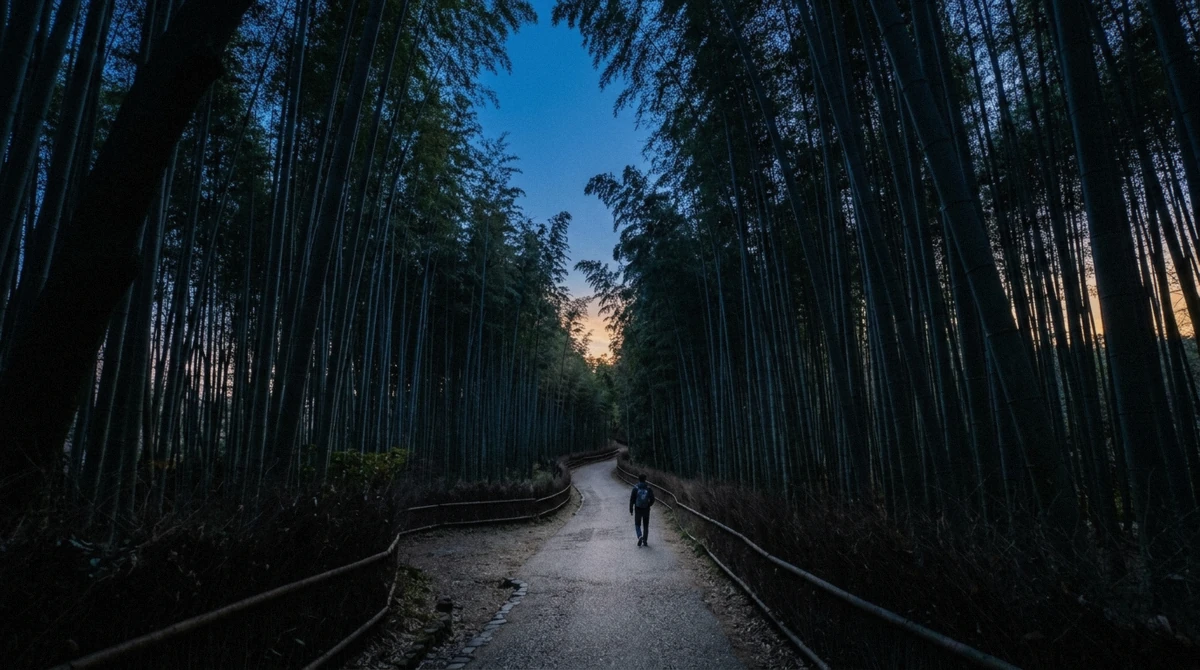
The Arashiyama Bamboo Forest is open 24 hours and free, so walking it at night is allowed and completely unlit. Alone, you get darkness, a loose gravel path and a district that shuts by 18:00. With a guide, you get a route, a story and someone who knows the last train. Ticketed night illuminations return only as short seasonal runs, around ¥1,500. The Kimono Forest at the tram station is lit every evening for free.
Key takeaways
- Open all night, free, no gate. Nobody is stopping you walking in at 22:00.
- There is no permanent lighting. Bring a torch and expect darkness, not a glow.
- Going alone is legal and low-crime, but the path is unlit and the district is shut after 18:00.
- The 2.5-hour ghost walk through the dark grove is the best-rated guided way in after sunset.
- Short on evenings? One tour pairs Fushimi Inari and Arashiyama in three hours.
- Hanatouro, the old winter light-up, ended in 2021. Ticketed lantern runs have since returned: 18:00 to 21:00, ¥1,500.
- Free and lit every night: the Kimono Forest and the Togetsukyo riverbank.
Can You Go, and What Is It Like
The short answer is yes. The path is a public lane through a working grove, with houses and temples backing onto it, and it carries no restriction after dark. Local people use it as a route home. There is no fence to climb and no rule you would be breaking.
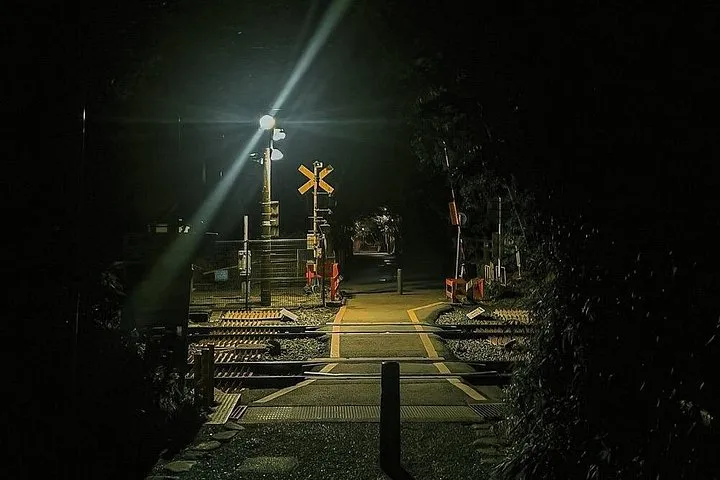
The honest description of the experience: the canopy that filters the light so beautifully at 7 in the morning blocks it completely at 8 at night. Under a full moon you get shapes and a faint sense of scale. Under cloud you get a wall of black with a paler strip of gravel running through it. The sound is the thing that survives after dark, and it is genuinely worth the walk on a windy night, which is exactly why the Ministry of the Environment listed this grove among the 100 Soundscapes of Japan.
What the district feels like after 18:00
Arashiyama empties earlier than anywhere else in Kyoto. Most restaurants close between 16:00 and 18:00, the shops on the main street pull their shutters by 18:00, and by 20:00 the streets around the station belong to whoever is walking to the last train. It is quiet, safe and slightly eerie.
This is worth knowing before you plan an evening here. There is no dinner scene to fall back on, so eat in central Kyoto and come out afterwards, or eat here before 17:00 and stay.
Going Alone After Dark: The Real Risks
Arashiyama at night is not dangerous in the crime sense. Kyoto is one of the safest cities of its size anywhere. The risks of a solo night walk are practical, and they stack up because everything that would normally help you is closed or switched off.
The table sets the two ways in side by side, based on what the path is like after dark and what the guided walks listed below include.
| On your own | With a guide | |
|---|---|---|
| Light | None in the grove. A phone torch lights three metres | Guide leads the way on a set route |
| Footing | Loose gravel, roots, a drainage channel on one side | Paced walk, stops on level ground |
| Navigation | Side lanes run into private gardens and dead ends | No wrong turns into someone's property |
| If something goes wrong | Shops shut, few people about, signs in Japanese | A local guide with a phone and a plan |
| Getting home | Last Randen tram leaves early, easy to miss | Ends at Saga-Arashiyama Station on the JR line |
| What you take away | Silhouettes and the sound of the wind | Local legends and the district's history |
Who should not go alone
If this is your first night in Japan, if you do not read Japanese, if you are walking with children, or if a dark path with nobody on it makes you uneasy, the grove after sunset is a poor solo plan. Nothing bad is likely to happen. It is simply a long walk in the dark to see very little.
The guided walks solve the part that matters most at night, which is context. Without it the grove is a black corridor. With a storyteller it becomes the place the evening was built around. The night walks below all end at Saga-Arashiyama Station, a short ride from Kyoto Station.
Guided Night Walks in the Bamboo Forest
These are the walks that take you into the grove after sunset rather than in daylight. Two are ghost-story walks through the unlit path, one pairs Fushimi Inari with Arashiyama in a single evening. Prices, ratings and review counts are the platforms' own.
 from $32
Best Rated Night Walk
from $32
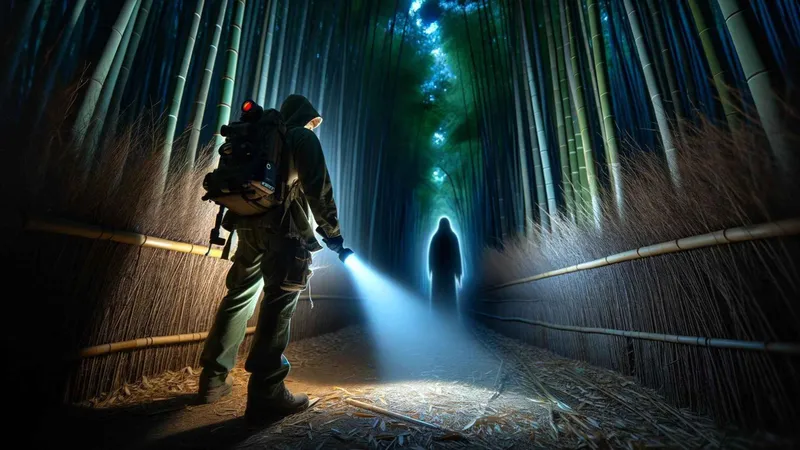
Best Rated Night Walk Kyoto Ghost Tour: Dark Tales and Legends in the Bamboo Forest at Night
The walk that takes you into the unlit grove on purpose. A small group meets at Saga-Arashiyama Station, picks up a drink at a convenience store and spends…
- About an hour on foot inside the dark bamboo forest
- A short solo walk along the path
- Ghost stories, urban legends and local dark history
- One drink included, alcoholic or not
 from $56
Two Sights, One Evening
from $56
Two Sights, One Evening Fushimi Inari and Arashiyama Night Walking Tour
Two of Kyoto's big sights in one evening, both after the day crowds leave. It starts near Fushimi Inari Shrine with about an hour under the lower torii…
- Fushimi Inari torii paths and Arashiyama in 3 hours
- Train fare between the two included
- Small group, 8 people at most
- Ends at Saga-Arashiyama Station
 from $44
Most Reviewed at Night
from $44
Most Reviewed at Night Arashiyama Night Ghost Tour: Urban Legends in the Bamboo Forest
A storytelling walk through Arashiyama after dark, built around the pitch-black bamboo forest. The group of up to 12 meets inside Saga-Arashiyama Station at the round window by…
- Up to 12 guests per group
- Solo walk through the dark grove
- One drink included
- Meets upstairs in Saga-Arashiyama Station, contact by WhatsApp
All three are adults-first: the ghost walks set a minimum age of 16, and none of them runs during an illumination event. Figures current for Q3 2026.
The Illuminations: What Happened, and What Runs Now
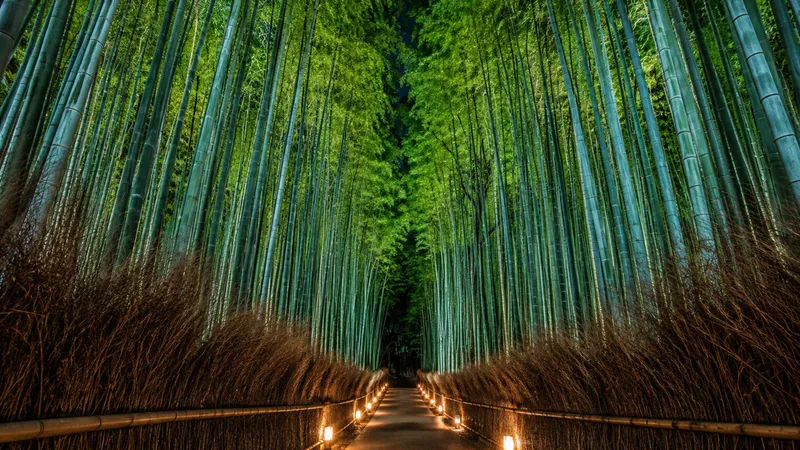
For about two decades, the Arashiyama Hanatouro lit the grove and the surrounding streets for ten days each December, and it was the reason those glowing-bamboo photographs exist. It ended in 2021 and did not come back under that name.
After a gap of four years, ticketed night events returned. The October 2025 run lined the bamboo path with lanterns from 18:00 to 21:00, with last entry at 20:30 and a ¥1,500 ticket, free for primary school children and younger. The bamboo lanterns were handmade by local residents, and ticket revenue went to preserving the grove, restoring its bamboo fences and maintaining toilets and bins (Time Out). That is the model to expect now: a paid, limited-date event rather than a free district-wide festival.
| Hanatouro (to 2021) | Illuminations since 2025 | |
|---|---|---|
| Cost | Free, district-wide | About ¥1,500 per ticket |
| Dates | Ten nights each December | Limited runs, dates change each year |
| Hours | Roughly 17:00 to 20:30 | 18:00 to 21:00, last entry 20:30 |
| Coverage | Grove, streets and temples | A ticketed section of the path |
| Status | Discontinued | Returns seasonally, no fixed schedule |
Why the photographs still circulate
Almost every glowing-bamboo image you have seen dates from a Hanatouro December or one of the recent ticketed runs, and almost none of them say so. Search results, stock libraries and social posts show the lit grove without a date, which is why visitors arrive in June expecting lights and find a dark path.
If the lit version is the reason you are coming, treat it as an event to plan a trip around, not a feature of the place.
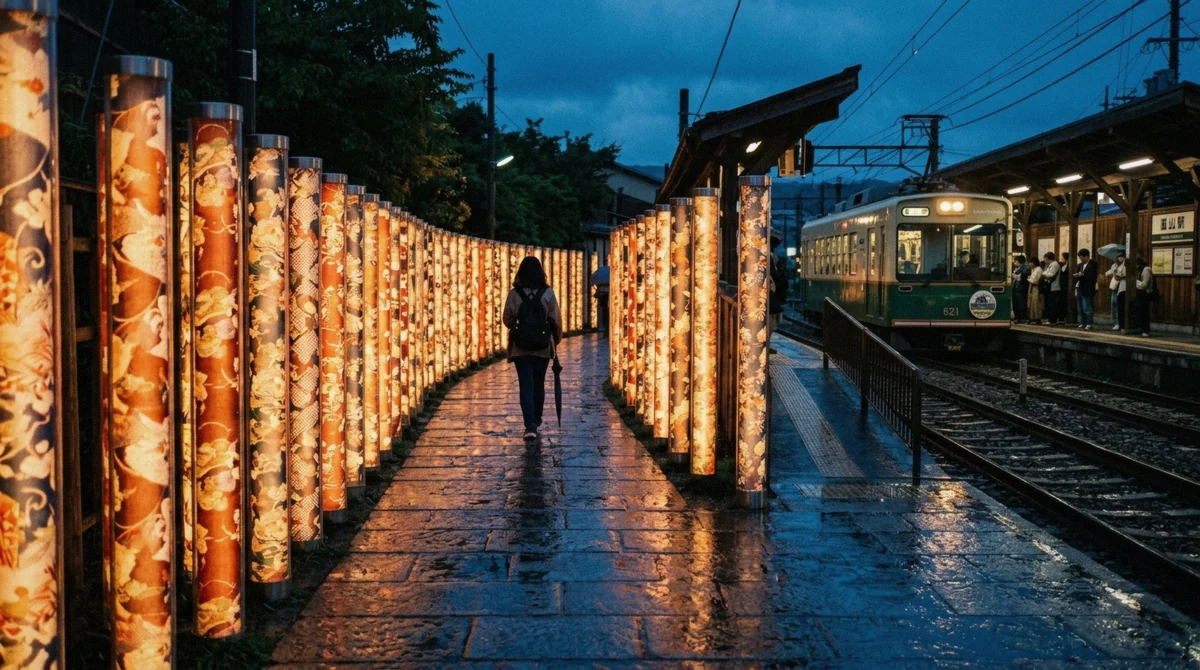
The Kimono Forest, ten minutes from the grove, is lit every evening and costs nothing.
What Is Actually Lit Every Night
Three things reliably reward an evening in Arashiyama, and none of them require a ticket or a date.
- The Kimono Forest at Randen Arashiyama Station: about 600 pillars of Kyo-yuzen fabric, each with an LED inside, lit from dusk, free and open station ground
- Togetsukyo Bridge and the Katsura riverbank, where the lamps stay on late and the mountains hold a silhouette against the sky
- The grove itself as a sound rather than a sight, best on a night with wind
An evening that works
Arrive around 16:30 while there is still light, walk the grove when the day crowd has gone, cross to the bridge for sunset, then walk back up the shopping street to the station as the pillars come on. That sequence takes about ninety minutes, costs the price of a train ticket and gives you the two best evening sights in the district in the right order.
Add dinner in central Kyoto afterwards. The JR line runs back to Kyoto Station in 16 minutes, and the last trains leave Saga-Arashiyama around 23:00. The Randen tram finishes earlier, so check the last departure if you are riding it home.
Why the grove goes dark and the station does not
The difference is ownership. The Kimono Forest sits on railway property, where the operator installed the LEDs as part of the station and pays to run them. The grove is a public lane between land held by temples and private households, so lighting it means agreeing a scheme with everyone whose garden backs onto the path, running power down a route with no infrastructure, and accepting what floodlights do to a working bamboo stand and to the people living beside it.
That is the practical reason the light-ups have always been temporary, ticketed and short. It is also why nobody should expect permanent lighting here: the grove is somebody's back fence as much as it is a sight.
Safety, Torches and Photographs
Kyoto is among the safest cities of its size anywhere, and Arashiyama after dark is not a place where personal safety is the concern. The risks are ordinary ones: an unlit gravel path with tree roots, a shallow drainage channel along one side, cyclists using the lane as a shortcut, and no open shop if something goes wrong.
A phone torch is enough. Walking with it off is more atmospheric, and works fine once your eyes adjust on a night with any moon at all.
- Wear shoes with grip: the gravel is loose and the path is gently uphill
- Stay on the main lane, since the side paths run into private property
- Do not use flash near the houses that back onto the grove
- Drones are banned here at any hour
- Check the last train before you walk in, especially if you are on the Randen
Photographing it after dark
Without a tripod, the only window that works is blue hour, roughly 20 to 30 minutes after sunset, when there is still enough sky light to separate the culms from the background. After that a handheld phone gives you noise and a smear.
With a tripod you have a problem of a different kind: tripods on the main path are discouraged at any busy hour and the grove has no lighting to work with, so most serious night photographs of this place were taken during a ticketed event with permission. The best photo spots guide covers the daylight frames that actually reproduce.
If you want the grove at an hour when a camera can actually record it, our guide to the Arashiyama Bamboo Forest sets out the two windows that work and the walks built around the earlier one.
Sunset Times, and When Blue Hour Falls
Because the only reliable evening window is the half hour after sunset, the month you visit decides how late you are walking. Kyoto sits at 35 degrees north, so the swing between midwinter and midsummer is close to two and a half hours.
| Month | Sunset, roughly | Blue hour ends | Practical note |
|---|---|---|---|
| January | 17:00 | 17:40 | Cold and clear, the district is already shut |
| April | 18:30 | 19:10 | Blossom crowds gone by then, path calm |
| June | 19:15 | 19:55 | Long wait after dinner service ends |
| August | 18:50 | 19:30 | The most comfortable hour of a hot day |
| October | 17:30 | 18:10 | Best pairing with an illumination run |
| December | 16:50 | 17:30 | Dark before the shops close |
Getting the timing right
Aim to be on the path about twenty minutes before sunset. That gives you the last usable light under the canopy, the silhouette phase as the sky goes cobalt, and time to walk down to the Kimono Forest as its pillars come on. The whole sequence fits in an hour.
One detail people miss: the canopy makes the grove go dark noticeably earlier than the open riverbank. Whatever the sunset table says, the bamboo path loses its light ten to fifteen minutes before the bridge does.
Night Questions People Ask
Can I go to Arashiyama Bamboo Forest at night?
Yes. The path is public, open 24 hours and free, with no gate to close and nobody to stop you. Bring a torch: there is no lighting of any kind in the grove, so after dark you are walking between silhouettes rather than looking at illuminated bamboo.
Are there night tours of the Arashiyama bamboo forest?
Yes. The best rated is a 2.5-hour ghost walk that meets at Saga-Arashiyama Station and spends about an hour on foot in the dark grove, with a short solo stretch. The same kind of walk is also listed with groups of up to 12. If you want two sights in one evening, a three-hour tour covers Fushimi Inari first and finishes in Arashiyama.
Is it scary to walk the bamboo forest alone at night?
It is dark rather than dangerous. There is no lighting, the gravel is loose and the district is almost empty after 20:00, which many people find unsettling. If that sounds uncomfortable, a guided night walk gets you the atmosphere with company and a route back to the station.
Can children join the Arashiyama night ghost tour?
No. The ghost walks set a minimum age of 16 and include adult themes. Families are better off with the free evening sequence of grove, Togetsukyo Bridge and the lit Kimono Forest, finished before the district goes dark.
Is the Arashiyama bamboo forest lit up at night?
Not normally. The Hanatouro winter light-up ended in 2021, and since 2025 illuminations have returned only as limited ticketed runs, around ¥1,500 with entry from 18:00 to 21:00 and dates that change each year. Outside those runs the grove is completely dark. The Kimono Forest at the tram station is lit every evening for free.
What is the best time to go to Arashiyama Bamboo Forest?
Before 8:30 in the morning for the photograph, and 16:30 to sunset for the quiet. Our full hours and timing guide breaks the day down hour by hour. Night walks are for the atmosphere and the sound, not for what you can see.
Is it safe to walk around Kyoto late at night?
Kyoto is very safe by any international standard, and Arashiyama is quieter than most of it after dark. The practical hazards here are the unlit gravel path, cyclists using it as a shortcut, and the fact that the district shuts early, so there is nowhere to duck into if the weather turns.
What is there to do after 8pm in Arashiyama?
Honestly, very little. Restaurants close between 16:00 and 18:00 and the shops follow. What remains is the lit Kimono Forest, the riverbank at Togetsukyo, and the walk itself. Most people ride the 16 minutes back to Kyoto Station and eat there, which is what we would suggest.
How do you get to the bamboo forest at night?
The same three ways as in daylight: the JR Sagano Line from Kyoto Station in 16 minutes for ¥240, the Randen tram for a flat ¥250, or a taxi for about ¥3,500. Check the last departures, since the Randen finishes earlier than the JR line. Our getting there guide lists each route.
Can you photograph the grove at night without a tripod?
Only during blue hour, the 20 to 30 minutes after sunset when the sky still carries light. Later than that, a handheld phone produces noise. Serious night images of this grove almost all come from ticketed illumination events, when the path is lit and photography is expected.