 Arashiyama Bamboo Forest
How to Get to Arashiyama Bamboo Forest from Kyoto: Every Route Compared
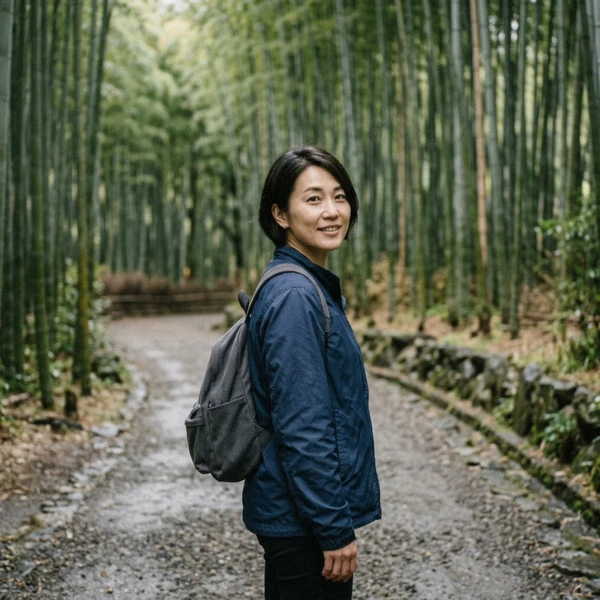
Working out how to get to Arashiyama bamboo forest from Kyoto takes about one sentence: the JR Sagano Line runs from Kyoto Station to Saga-Arashiyama in 16 minutes for ¥240, and the grove is a ten-minute walk from that platform. The complication is that three different railway companies run three different Arashiyama stations, they are not in the same place, and the one you pick decides whether you arrive next to the bamboo, next to the monkey park, or next to the lit fabric pillars. Fares and times below were checked in August 2026, and the sights themselves are on our Arashiyama Bamboo Forest guide.
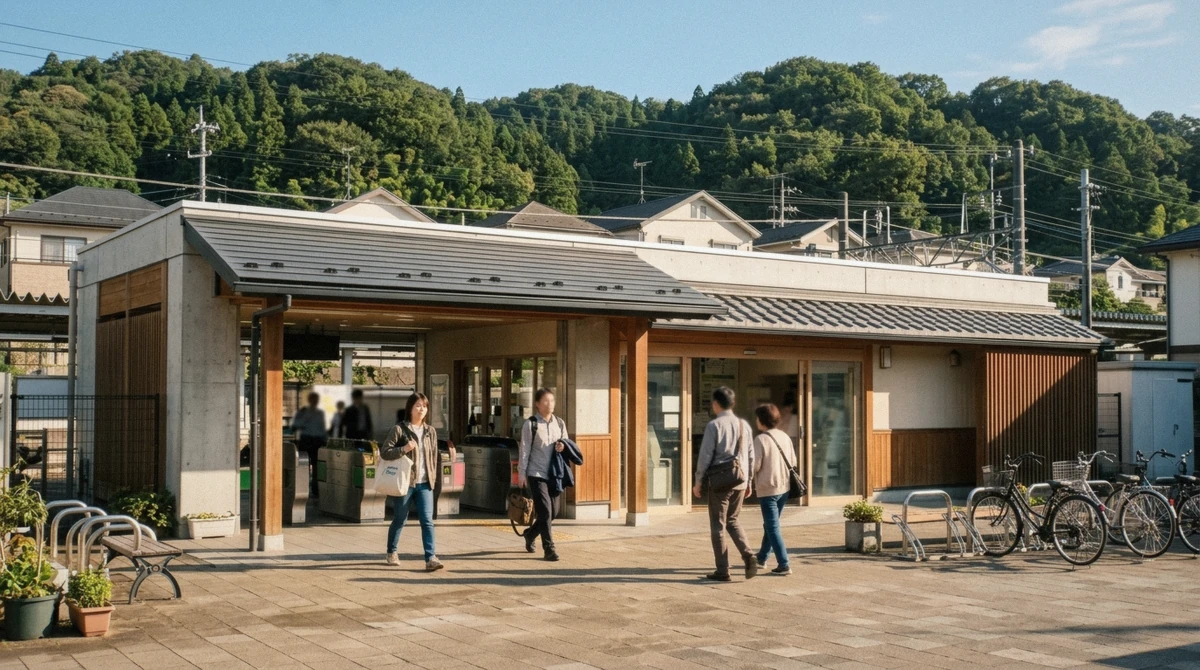
Quick answer
Take the JR Sagano Line from Kyoto Station to Saga-Arashiyama: about 16 minutes, ¥240, covered by the Japan Rail Pass, then a 10-minute walk to the grove. The alternative is the Randen tram to Arashiyama Station, a flat ¥250, which puts you 15 minutes away but delivers you through the Kimono Forest. Buses take 45 minutes for ¥230. From Osaka, the Hankyu line via Katsura runs about 50 minutes for ¥410.
Key takeaways
- Fastest: JR Sagano Line, 16 minutes, ¥240, Japan Rail Pass valid.
- Three separate Arashiyama stations serve the district and none of them are the same place.
- Randen tram: flat ¥250, arrives at the Kimono Forest, 15 minutes from the grove.
- Buses 28 and 93: ¥230 and about 45 minutes, worth it only from certain hotels.
- From Osaka: Hankyu via Katsura, 48 to 50 minutes, ¥410.
- Guided walks meet at a station here, not at a Kyoto hotel, so you travel out either way.
Every Route, Compared
One-way adult fares, as of August 2026. Times are platform to platform, before the walk at the far end.
| Route | Time | Fare | Best for |
|---|---|---|---|
| JR Sagano Line from Kyoto Station | 16 min | ¥240 | Almost everyone, and all Rail Pass holders |
| Randen tram via Uzumasa Tenjingawa | About 15 min plus the subway | ¥250 flat | Arriving at the Kimono Forest, evening returns |
| City bus 28 or 93 | About 45 min | ¥230 | Staying on the route, no transfers |
| Taxi from central Kyoto | 30 to 40 min | About ¥3,500 | Before the first train, or with luggage |
| Bicycle from central Kyoto | 50 to 70 min | Rental from ¥1,000/day | Fit riders, flat riverside route |
| Hankyu from Osaka-Umeda via Katsura | 48 to 50 min | ¥410 | Day trips from Osaka |
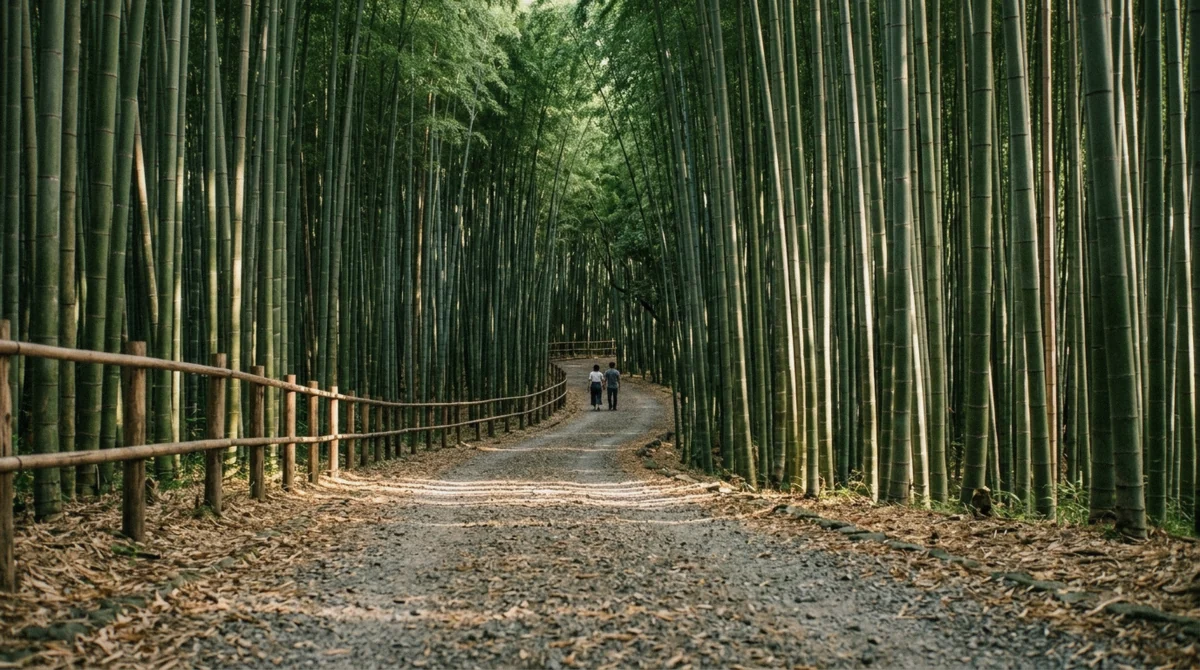
Ten minutes downhill from the JR gates, and this is what you arrive at.
Where the Grove Actually Is
The Arashiyama Bamboo Forest sits at 35.0168°N, 135.6716°E, in Sagaogurayama Tabuchiyamacho in Ukyo Ward, on the north side of the Katsura River in the far west of Kyoto. The district spreads across both banks: the grove, the temples and the shopping street on the north side, the monkey park and Hankyu station on the south.
The three stations sit in a rough triangle. JR Saga-Arashiyama is the northernmost and closest to the grove. Randen Arashiyama is in the middle of the shopping street, closer to the bridge. Hankyu Arashiyama is across the river entirely, seven minutes from the monkey park gate and about fifteen from the bamboo.
The Three Stations and the Grove
Pick the station that matches your first stop rather than the one nearest your hotel.
By JR, the Default Answer
From Kyoto Station, use the JR Sagano Line, signed on some boards as the San-in Line, from platforms 31 to 34 in the underground section at the west end of the station. Local trains take about 16 minutes to Saga-Arashiyama and rapid services a little less; both cost ¥240. Trains run every ten to fifteen minutes through the day.
Out of the ticket gates, turn right and walk downhill. The route to the grove is signed, and in practice you follow everyone else for about ten minutes. This is also the station beside Torokko Saga, where the Sagano Romantic Train leaves from, and it has coin lockers for luggage.
- Platforms 31 to 34 at Kyoto Station, underground, west end
- 16 minutes, ¥240, every 10 to 15 minutes
- Covered by the Japan Rail Pass and the JR Kansai passes
- Coin lockers at the station, useful if you are moving hotels that day
- Torokko Saga, for the scenic railway, is right beside it
By Randen tram
The Randen, run by Keifuku, is the small tram line that ends in the middle of Arashiyama's shopping street. From Kyoto Station the usual route is the Karasuma subway to Shijo, change to the Tozai line for Uzumasa Tenjingawa, then the tram; from downtown, board at Shijo-Omiya and ride straight through.
The tram is a flat ¥250 however far you ride. It takes longer than the JR, and it is worth it in one direction: coming home in the evening, because the platform is wrapped in the Kimono Forest and its 600 pillars light up after dark. A one-day Randen pass costs ¥700, which only pays from three rides.
By bus, taxi and bicycle
Kyoto city buses 28 and 93 reach Arashiyama for ¥230 and take about 45 minutes, longer in traffic, which is why the train wins for almost everyone. The bus makes sense if your hotel sits on the route and you would otherwise change trains twice.
A taxi from central Kyoto runs 30 to 40 minutes and around ¥3,500. It is the only option before the first trains, which matters if you are chasing the 06:00 light in the grove. Bicycles work too: rentals start around ¥1,000 a day and the ride out along the Katsura River is flat, quiet and takes about an hour.
Which trains to avoid
The JR Sagano Line is a commuter route as well as a tourist one, and between 07:30 and 08:30 on weekdays it carries both. Trains are full rather than unpleasant, but with luggage or a stroller it is worth waiting for the next one.
The reverse problem hits in the evening: from about 16:30 the platform at Saga-Arashiyama fills with everyone leaving the district at once, and three or four trains go by before the queue clears on an autumn Sunday. Riding the Randen tram back instead costs ¥250 and avoids the crush entirely, which is the main argument for using different lines in each direction.
From Osaka, and From Other Kyoto Bases
From Osaka, the cheapest and simplest route is the Hankyu Kyoto Line from Osaka-Umeda to Katsura, changing there to the short Hankyu Arashiyama branch. About 48 to 50 minutes end to end and ¥410, which is roughly a third of what the JR route via Kyoto Station costs. It lands you on the south bank, so you reach the monkey park before the bamboo.
Within Kyoto, the rule is that everything funnels through either Kyoto Station or the Randen. From Gion, take the Keihan or a bus to Shijo-Omiya and ride the tram straight out. From Kinkaku-ji, the Randen Kitano line connects at Katabiranotsuji. From the northern Kyoto hotels, the JR line via Kyoto Station is still usually faster than a cross-city bus.
| From | Route | Time | Fare |
|---|---|---|---|
| Kyoto Station | JR Sagano Line | 16 min | ¥240 |
| Downtown Shijo | Randen from Shijo-Omiya | About 25 min | ¥250 |
| Gion | Keihan or bus to Shijo-Omiya, then Randen | 40 to 50 min | About ¥480 |
| Kinkaku-ji | Randen Kitano line, change at Katabiranotsuji | About 30 min | ¥250 |
| Osaka-Umeda | Hankyu via Katsura | 48 to 50 min | ¥410 |
| Kansai Airport | Haruka to Kyoto, then JR Sagano Line | About 100 min | From ¥2,900 |
Luggage, strollers and step-free access
Coin lockers sit at both JR Saga-Arashiyama and Randen Arashiyama, which is where the suitcase goes if you are visiting between hotels. The grove path itself is loose gravel and gently uphill, with no step-free alternative and no paved surface at any point.
A stroller can be pushed along it with effort. It cannot go up to the monkey park, where the climb has steps. Anyone using a wheelchair will find the bamboo path itself difficult and the temple grounds mixed, though the riverbank and the shopping street are flat and manageable.
The Option That Removes the Planning
Guided walks here meet at one of the Arashiyama stations rather than at a Kyoto hotel, so you make the journey out yourself either way. What they remove is the second half of the problem: which entrance to use, which order to walk the sights in, and paying separately at four gates.
The five-hour circuit at $86 includes the Okochi-Sanso, Tenryu-ji and monkey park entries, roughly ¥2,300 of admissions on their own. The four-hour walks at $51 to $64 cover temple entry, matcha and the monkey park. The 2.5-hour early access walk at $57 exists for one reason, which is to have you on the path before the crowds. All of them are listed on our Arashiyama Bamboo Forest guide.
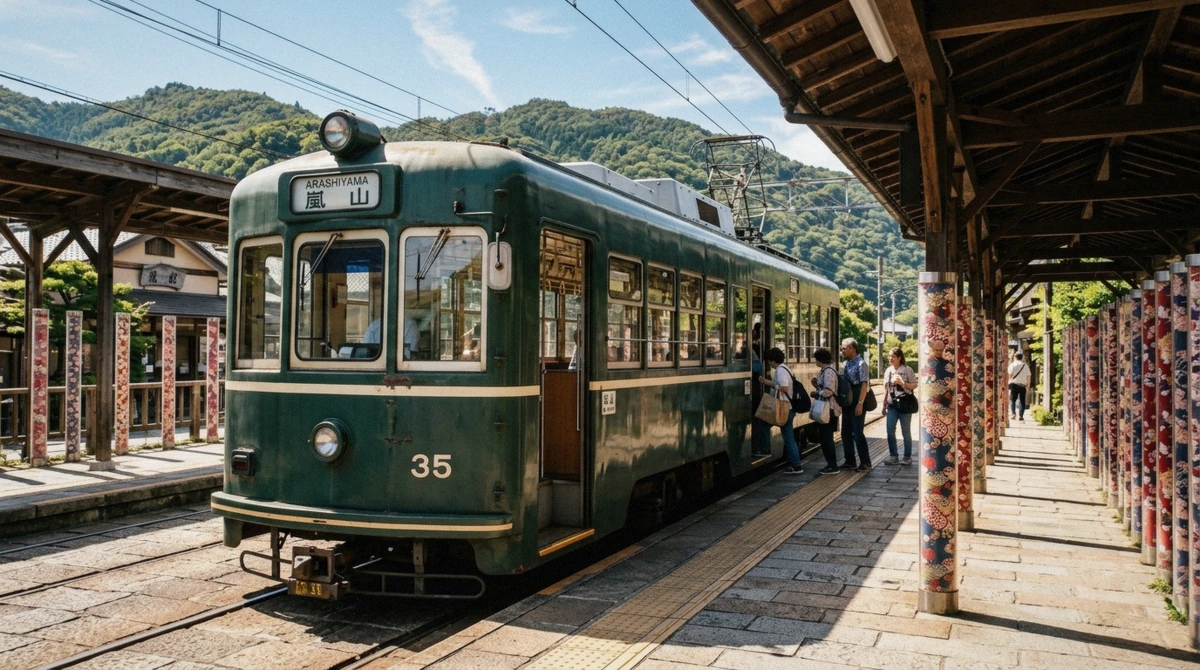
The Randen terminus. Slower than the JR line, and the better ride home.
Route Questions People Ask
What is the easiest way to get to Arashiyama?
The JR Sagano Line from Kyoto Station to Saga-Arashiyama: 16 minutes, ¥240, no transfers, trains every ten to fifteen minutes, and free with a Japan Rail Pass. Turn right out of the gates and walk ten minutes downhill to the grove. Nothing else out here is simpler.
Is Arashiyama a day trip from Kyoto?
It is a half-day trip for most people and a full day if you add the monkey park and the scenic railway. The grove itself takes fifteen minutes to walk. Being 16 minutes from Kyoto Station, it also works as a morning: out at 07:30, back in the city by 11:00 with the bamboo behind you.
How much time do you need to visit Arashiyama Bamboo Forest?
Fifteen minutes for the main path, ninety minutes with Tenryu-ji and Nonomiya Shrine, five to six hours for the whole district including the monkey park, the bridge and a leg on the scenic train. Our hour-by-hour timing guide breaks down which parts of the day are worth using.
Is it free to enter Arashiyama Bamboo Grove?
Yes. No ticket, no gate, no fee, open 24 hours. What costs money is everything around it, and the full fee breakdown lists each one, from the ¥500 Tenryu-ji garden to the ¥800 cash-only monkey park gate.
Which Arashiyama station should I use?
JR Saga-Arashiyama for the bamboo grove and the scenic railway. Randen Arashiyama for the shopping street, the bridge and the Kimono Forest. Hankyu Arashiyama for the monkey park and for arrivals from Osaka. They are three separate stations run by three companies, roughly ten minutes' walk apart.
Can you get there by bus from Kyoto Station?
Yes, on city buses 28 and 93 for ¥230, taking about 45 minutes against the train's 16. The bus is worth it only if you are staying on its route and would otherwise face two transfers. In cherry blossom and autumn weeks, road traffic makes it considerably slower.
How do you get to Arashiyama from Osaka?
Hankyu Kyoto Line from Osaka-Umeda to Katsura, then the Hankyu Arashiyama branch: 48 to 50 minutes and ¥410 total. It arrives on the south bank, near the monkey park, about fifteen minutes' walk from the grove across Togetsukyo Bridge.